
GoPro’s
Marketing Strategy

How I developed a growth strategy to help GoPro compete against smartphone cameras through AI and AR innovation.
Report Overview
Objective
Identify how GoPro can maintain market leadership despite smartphone competition.
Research
Porter's Five Forces, PESTEL Analysis, Strategic Group Mapping and Value Chain Analysis.
Recommendation
Expand into AI-powered editing and AR-enhanced content creation.
Business Context
GoPro is a global technology company best known for its action cameras, designed to help users capture and share immersive experiences. Since its founding in 2002, the brand has built a strong reputation among adventurers, athletes, and content creators through products such as the HERO and MAX camera series, alongside a wider ecosystem of accessories and subscription-based services.
The company operates within the consumer electronics and imaging technology industry, serving customers across North America, Europe, and Asia-Pacific. While GoPro remains a leading brand within the action camera category, it operates in a highly competitive market that includes specialist camera manufacturers, emerging action camera brands, and technology companies offering alternative content creation solutions.
This project evaluated GoPro's strategic position within the action camera industry through a comprehensive analysis of its external environment, competitive landscape, and internal capabilities to identify opportunities for sustainable growth and competitive advantage.

The Challenge
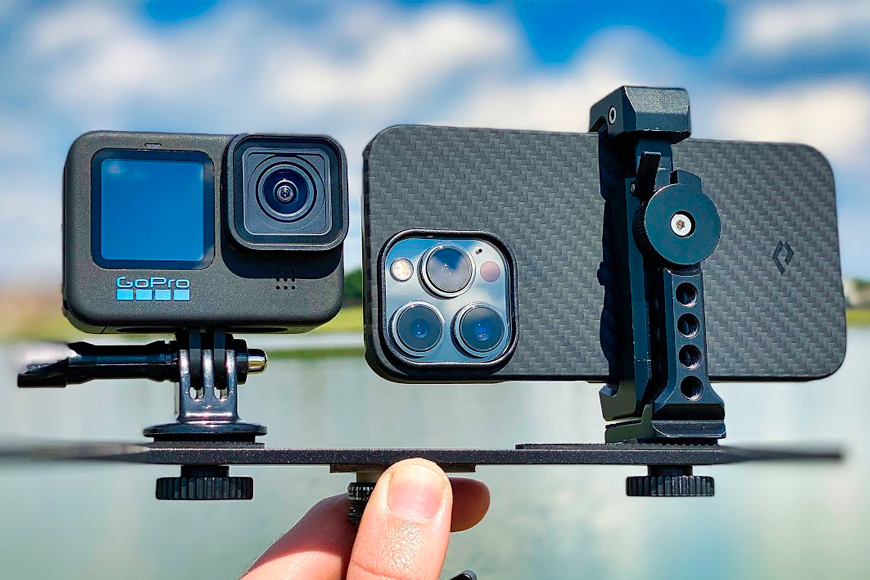
The action camera market faces increasing pressure from:
Rapid improvements in smartphone camera quality
AI-powered editing features built into phones
Consumer preference for carrying a single device
Growing competition from DJI and Insta360
As a result, GoPro risks becoming a niche product unless it can create new sources of value beyond hardware.
Research Conducted
-
Key Finding: Smartphone cameras pose the greatest substitute threat to GoPro's market position.
Why it matters: Consumers increasingly view smartphones as capable alternatives, reducing demand for dedicated cameras.
-
Key Finding: Advances in AI, AR and content creation technology are reshaping consumer expectations.
Why it matters: These technologies create opportunities for GoPro to differentiate beyond hardware.
-
Key Finding: GoPro's strongest source of competitive advantage is technology development and innovation.
Why it matters: Continued investment in R&D is essential to maintain differentiation.
-
Key Finding: GoPro operates within the action camera segment alongside DJI and Insta360, but faces indirect competition from smartphone manufacturers such as Apple and Samsung, whose increasingly advanced camera systems are changing consumer expectations.
Why it matters: While GoPro remains a market leader in action cameras, future growth depends on differentiating through specialised experiences and emerging technologies rather than competing solely on camera quality.
Recommendation
Based on the analysis, I recommended that GoPro pursue a product diversification strategy centred around artificial intelligence (AI) and augmented reality (AR). Rather than competing directly with smartphone manufacturers on camera quality alone, GoPro should strengthen its position as a content creation ecosystem by introducing AI-powered editing tools and immersive AR features. This would enable the brand to create additional value for content creators while reinforcing its differentiation within the action camera market.
Strategic Insight
GoPro's long-term challenge is not competing against better cameras, but remaining relevant in a world where consumers increasingly expect content creation, editing, and sharing to happen within a single ecosystem. While smartphones dominate convenience, GoPro's opportunity lies in creating specialised experiences through AI-powered editing, immersive capture, and adventure-focused technology that smartphones cannot easily replicate.
Expected Results
Stronger Market Differentiation
AI and AR capabilities would help GoPro offer experiences that extend beyond traditional camera hardware, making it more difficult for competitors and smartphone manufacturers to replicate its value proposition.
Expanded Customer Reach
New technologies could attract a broader audience, including casual creators, professional videographers, and technology enthusiasts, while maintaining appeal among GoPro's existing adventure-focused customer base.
New Revenue Opportunities
Integrating AI-powered tools with GoPro's subscription ecosystem could increase recurring revenue through premium software features and cloud-based services.
Long-Term
Competitive Advantage
By investing in emerging technologies and innovation, GoPro would be better positioned to respond to evolving consumer expectations and maintain relevance within a rapidly changing market.